https://thescribsandnibs.com/europe/italy/tivoli-day-trip-guide/
What to see:
1. Villa d'Este Gardens
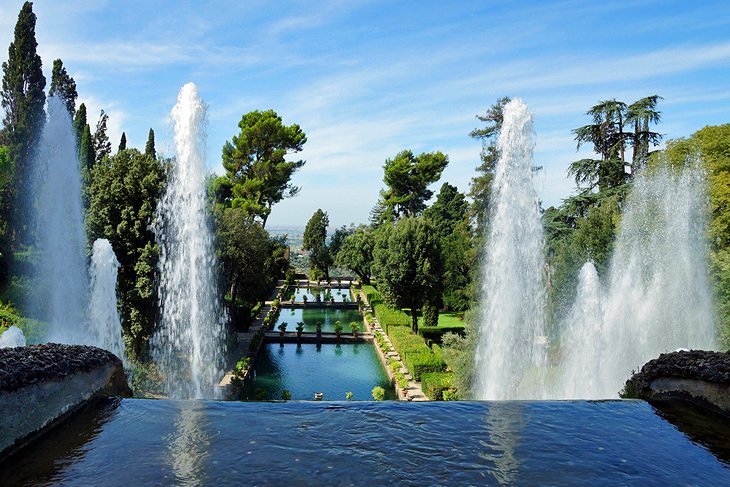
Often cited as the definitive example of Italianate gardens, the vast Villa d'Este estate has been the model for gardens all over Europe. Don't expect to run quickly through, as this is not just one garden, but a whole series of them, highlighted by statuary, elaborate fountains, water play, pools, cascades, grottos, and terraces with spectacular views across the Roman Campagna.
From the time he arrived as Governor of Tivoli, Cardinal Ippolito d'Este, a member of Ferarra's most prominent Renaissance family, set to work planning the grounds to surround the governor's villa.
The layout was unusual for its time, a long central alley intersecting with paths to the major fountains, each set against the surrounding landscape to seem like its own garden. Among the garden's highlights are the elaborate Fontana dell'Organo, with its water-powered organ; the Cento Fountain, a long row of fountains in a stone wall; Fontana dell'Ovato, with its cool walkway behind a waterfall; Fontana del Nettuno; and the Gran Loggia, where the cardinal and his guests dined overlooking the gardens.
Address: Piazza Trento, Tivoli
2. Villa Adriana (Hadrian's Villa)
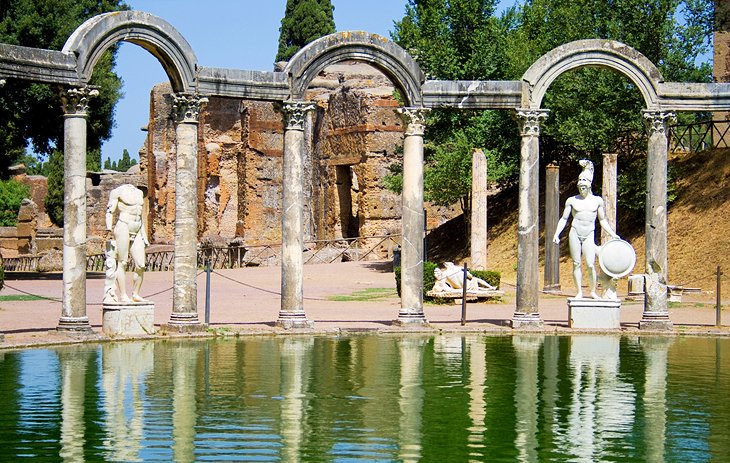
The magnificent complex of buildings and gardens, built in the second century AD by the widely traveled Roman Emperor Hadrian, covers an area of 120 hectares. Hadrian tried to reproduce here in full size some of the places and great buildings he had seen in his travels, especially those of Greece and Egypt. He had some of the finest Greek sculptures reproduced, and many of these are in Rome today, long after the Greek originals have disappeared.
In inscribing it as a World Heritage Site, UNESCO described it as combining "the best elements of the architectural heritage of Egypt, Greece, and Rome in the form of an "ideal city." Today, most of this open-air museum of the finest second-century architecture lies in ruin, but in such a scenic, green setting that it seems more like a romantic garden than an archaeological site.
A few buildings have been repaired or reconstructed, but to appreciate what the complex looked like, begin by seeing the model near the entrance, then explore the grounds and the remains of the imperial palace. You'll find mosaics, baths, a nymphaeum, fountains, colonnades, statues, and the Maritime Theater—a pool with an island where Hadrian escaped the pressures of government.
Address: Via Tiburtina, Tivoli
3. Villa d'Este Palace
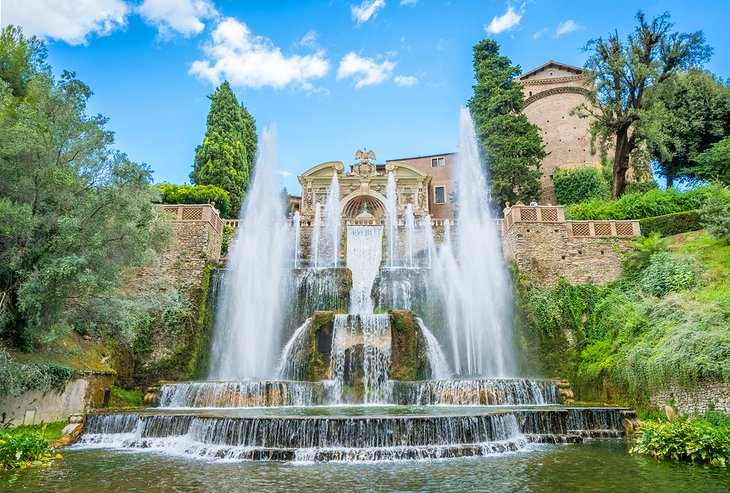
When Cardinal Ippolito d'Este became governor of Tivoli, he immediately set architect/artist Pirro Ligorio to renovating the governor's palace, in a former Benedictine monastery, to his own taste. Some of the brightest lights of late Roman Mannerism—Girolamo Muziano, Livio Agresti, Durante Alberti, Federico Zuccari, Cesare Nebbia, and Antonio Tempesta—decorated its rooms, which were almost completed, along with the gardens, by the cardinal's death in 1572.
Although some of the original wall paintings have been lost, many remain, along with nearly all the elaborately painted ceilings. A row of fountains along a corridor lit from the main courtyard was designed by Ligorio, so the cardinal could enjoy them even in bad weather. Be sure to see the graceful spiral staircase.
The palace was later owned by Archduke Francis Ferdinand of Austria, whose assassination at Sarajevo in 1914 precipitated World War I.
Address: Piazza Trento, I-00019 Tivoli
4. Villa Gregoriana
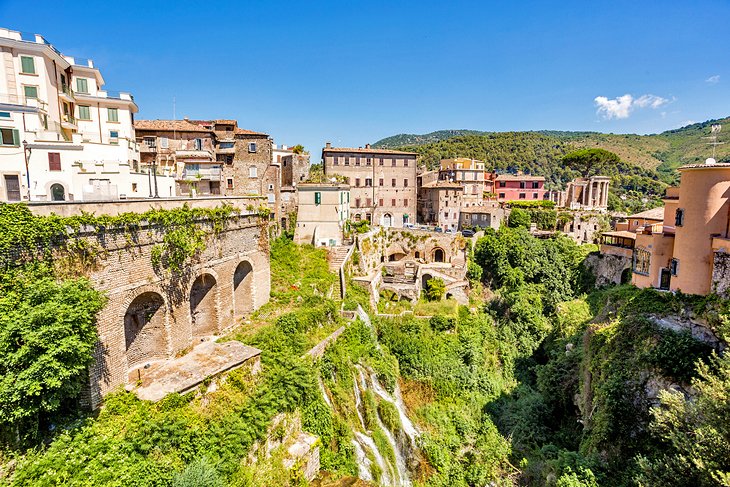
To the east of Piazza Rivarola, Ponte Gregoriana spans the gorge of the Aniene River, and beyond the bridge is the main entrance to the park of the Villa Gregoriana, commissioned by Pope Gregory XVI in 1835.
The waters of this river are diverted through the Traforo Gregoriano, a long double tunnel cut through the west side of Monte Catillo in 1826-35 to prevent the frequent devastating floods. The water emerging from the tunnel forms magnificent waterfalls with a total drop of 160 meters.
At the end of the tunnels is the 108-meter Grande Cascata, which you can see best from the upper and middle terraces. Also in the park are the Sirens' Grotto and, at the end of a gallery, the Grotto of Neptune, where the main channel of the Aniene formerly flowed. From the entrance to the gallery, a path zigzags up to the exit near the two temples.
Address: Largo Sant'Angelo, Tivoli
5. Tempio di Vesta and Tempio della Sibilla (Temples of Vesta and Sybil)
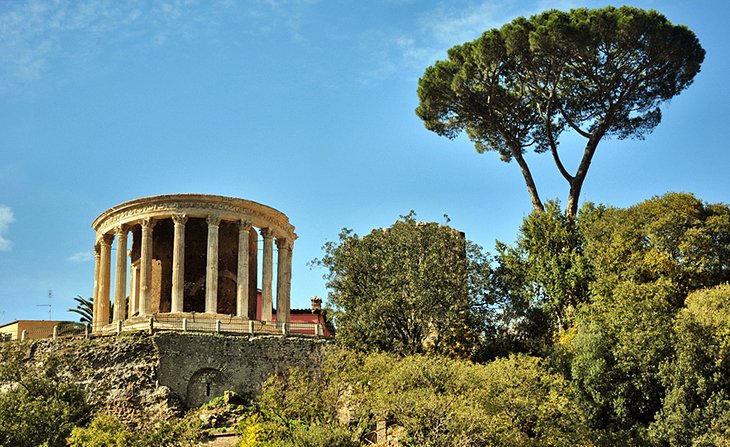
East of the cathedral and not far from Piazza Rivarola, the Temples of Vesta and Sybil sit in Tivoli's old acropolis of Tibur Superbum overlooking Villa Gregoriana. The round temple to Vesta, with 10 of its original 18 Corinthian columns still standing, was built in the second or first century BC. The nearby rectangular temple of the same age is called the Temple of Sybil, although it's not known for certain who either of them was dedicated to.
The round temple owes its relatively good condition today to its Christianization in the Middle Ages as the church of Santa Maria della Rotonda, but any sign of those alterations have long since disappeared. You can also reach the temples by a path from the Villa Gregoriana. The Temple of Vesta was a favorite subject of 19th-century artists on the "Grand Tour."
Address: Via della Sibilla, Tivoli
6. Rocca Pia
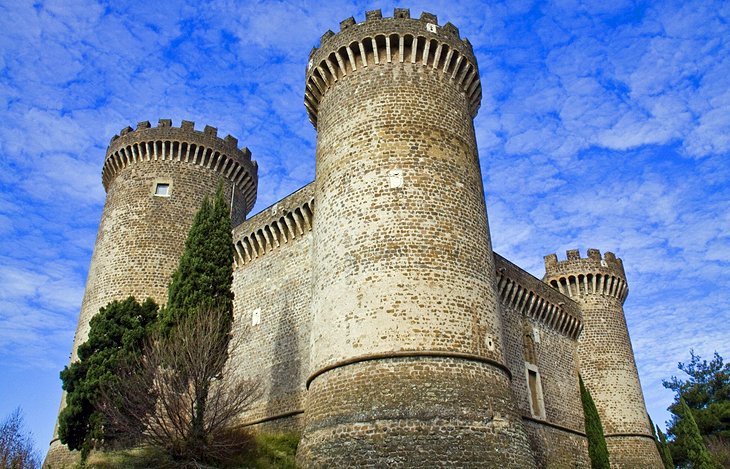
Although the Latin inscription above the entrance to this formidable castle says it was built by Pope Pius II for the protection of the good people of Tivoli from their enemies, the pontiff's intentions were more to remind the frequently rebellious townspeople of papal authority. The resulting fortress, with its four round towers and thick walls, is certainly imposing. Enter it across a drawbridge for views from its ramparts.
Not far from the Rocca Pia, on Via Aldo Moro near Piazza Garibaldi, are the remnants of Bleso Amphitheater, dating from the 2nd century AD. Much of the amphitheater, which seated 2000 spectators, was destroyed during the building of Rocca Pia.
Address: Vicolo Barchetto, Tivoli
7. Via delle Cascatelle
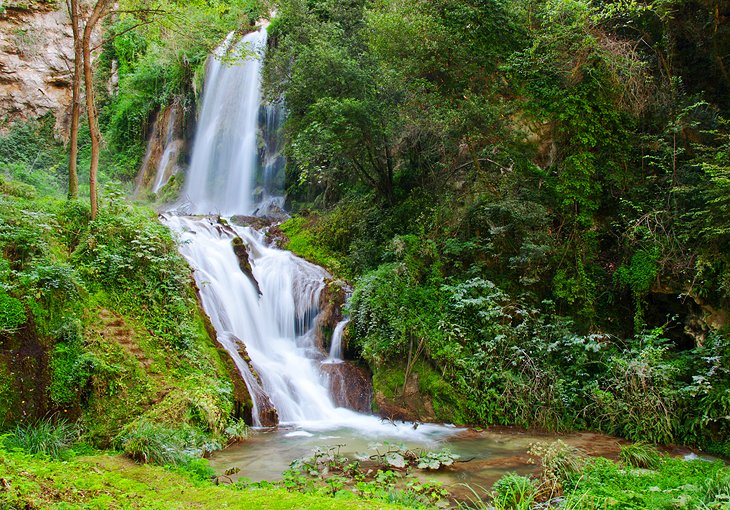
From the entrance to the Villa Gregoriana, the Via Quintilio Varo runs around the outside of the park and then continues along the right bank of the Aniene River, past an arch in honor of the Virgin that was erected in 1955.
From here, Via delle Cascatelle leads along the river with beautiful views of the several waterfalls and the town. The best views of the waterfalls are from the Belvedere and from the church and former monastery of Sant'Antonio.
8. Mausoleum of Plauzi and Ponte Lucano
Overshadowed by Tivoli's two block-buster tourist attractions, the ancient Mausoleum of Plauzi is an important archaeological site, an example of the elaborate funerary monuments erected by noble Roman families (remember the tomb of Cecilia Metella on the Appian Way in Rome). The broad circular tower, about 35 meters high, stands on a square base, and although it is overgrown and in poor repair, it's an impressive monument.
Beside the mausoleum is the Ponte Lucano, a graceful seven-arch Roman bridge that carried the main road from Rome to Tivoli for more than two millennia. A testament to Roman engineering, it was built in the first century BC and retired from service as the main road only in the mid-20th century, remaining open to traffic until a few years ago.
9. San Lorenzo
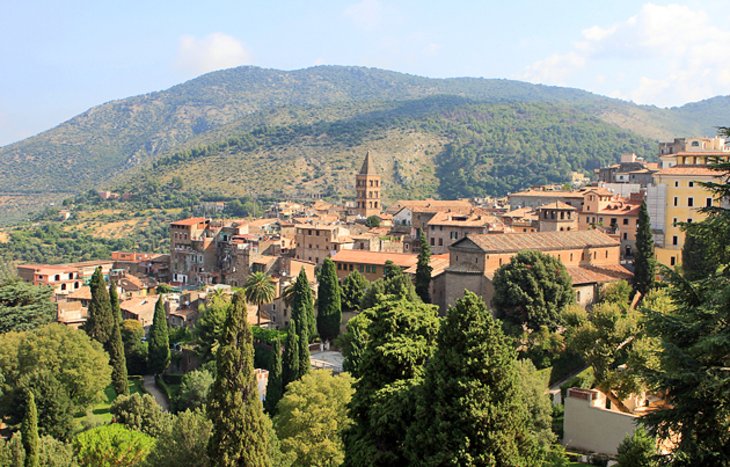
The tall square bell tower of Tivoli's cathedral of San Lorenzo that stands out above the town is from the church's rebuilding in Romanesque style between the 11th and 12th centuries. Behind the present apse, you can still see the apse of the earlier (first century BC) basilica that stood in the forum. The church was rebuilt once again in 1635, this time in Baroque style.
The interior vaults and apse were painted by the Roman artist Angelo De Angelis in 1816, those in the apse representing the four saints from Tivoli. The most important—and surprising—work in the church is in a side altar, the remarkable 13th-century wooden sculpture group Descent from the Cross. Above the altar in the Chapel of the Holy Savior is an excellent early-12th-century triptych of the Savior by the Benedictine monks of Farfa Abbey.
Address: Piazza del Duomo, Tivoli
10. Anio Novus Aqueduct
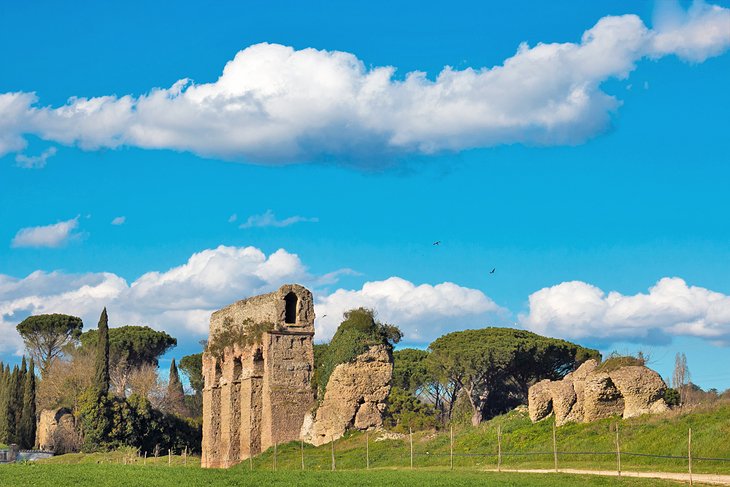
Begun by Emperor Caligula in AD 38, the Anio Novus Aqueduct was one of the four great aqueducts of Rome (remains of two of the others, the Aqua Anio Vetus and the Aqua Marcia, can also be seen in Tivoli). The Anio Novus was the tallest of these and considered to be the zenith of Roman aqueduct construction.
You can see several remains of the aqueduct along the Via Empolitana, with the best grouped together at Ponte degli Arci, about two kilometers from the center of town. The ruined aqueducts and Mausoleum of Plauzi were favorite subjects for artists, including Corot and Thomas Cole.
11. Sanctuary of Hercules Victor
A three-minute walk from the Villa d'Este, the imposing Sanctuary of Hercules Victor is an outstanding example of Roman cult buildings from the era of the Republic. Begun in the second century BC beside the Aniene River, the sanctuary was in three parts, covering about 3,000 square meters. A theater was built into the naturally sloping ground; aligned with it was the temple, around which was a large plaza surrounded by porticoes.
The complex was built over an ancient road, which later became the via Tiburtina that was carried beneath the buildings through a tunnel, called the Via Tecta (covered street).
The sanctuary, which housed the statue of Hercules, was designed to impress visitors arriving from Rome, with its foundations rising 50 meters above the river. When the site was no longer used as a sanctuary, its riverside location attracted various industries: woolen mills, an arms factory, hydro-electric plant, and paper mill.
After extensive excavation and restoration, the Sanctuary was opened to the public in 2015, with an Antiquarium established at the former paper mill. It displays sculptures and various stone pieces found in the excavations. The restored theater again hosts performances and concerts.
Instructions for getting there:
Instructions from websites:
So it's not hard to do this trip but for whatever reason Tivoli does not make it very easy the non-Italian tourist to get around.
- I'd recommend going on a Monday as Este is only open from 2:30 onwards so maybe it will not be as crowded on other days, and you can do Hadrian's villa in the morning which is open all day Monday. Also, as far I can tell, entry to both Villa d'Este and Hadrian's Villa are free on the first Monday of every month, resulting in a really cheap day out.
- The best way (IMO) to get to Tivoli is on the bus. The train is also an option but the trains are not very frequent (you could be waiting up to an hour), takes about the same time to get there and you'll have a 15 minute walk to get to Villa d'Este where as the bus drops you metres away from the entrance.
- The bus is very cheap - €2,30 each way and is much more frequent - something like every 15 mins during work hours. The bus between Rome and Tivoli is run by a company called Cotral (their buses are blue) and you can catch the bus by getting the metro to Ponte Mammolo.
- Once you exit the metro take the stairs up to the next level where you will find the buses and their ticket machines. I would advise buying 2 tickets for a return journey as we found it to be a bit awkward to find an open tabacchi shop in Tivoli.
- The bus to Tivoli usually leaves from stop 2 and once on validate one of your tickets and ask the driver to let you know the stop to Villa d'Este.
- The trip takes somewhere around 40 minutes (I think) and will drop you off in Tivoli's main square, just metres from the entrance to Villa d'Este.
Once there:
- Do Hadrian's Villa first...it takes somewhere between 2 to 3 hours to see everything. To do this walk down from the bus stop towards the grey information booth. To the left at the bottom of the hill there is a Tabacchi shop on the corner near the information kiosk. Go in and ask for 2 (return) tickets to Hardian's villa - this should cost €1,30 each. The bus to Hadrian's villa is the local Tivoli bus service and is run by a company called CAT. Their buses are green (as opposed to COTRAL's blue bus) and the bus number to catch is 4.
- To get to their stop walk across the road to the opposite side of where the Tabacchi shop is on the side with the traffic going out of the town the way you came in. You'll see both COTRAL and CAT bus stops here but ignore the blue buses and wait for the green number 4. They seem frequent, say every 15 minutes. These buses do not have validation machine - just give your ticket to the driver.
- The ride is about 15 minutes taking you of Tivoli centre and back down the hill to the town at the bottom. The bus will take you right to the entrance of Hadrian's villa at the end of a cul de sac.
- To get back to the center of Tivoli just return to the gates and wait for the bus to make its return journey.
- The CAT bus will leave you at the same stop in the Tivoli center square as the Cotral bus did.
- Try out Tivoli Burger for lunch. Amazing burgers for a good price that won't be "heavy" in your gut.
- Go to Villa d'Esta next. To find Villa d'Esta, walk down the hill and veer to the right and cross a large empty square - you should see some sign posts pointing the way. The villa is relatively anonymous looking building behind this square.. the ticket office is through the door.
- To explore the gardens and villa takes about 2 hours.. be sure to check out the statue of the goddess Artemis at the very back of the villa... it's not as visually spectacular as some of the other amazing fountains but deserves checking out!
- When you're ready to leave, return to the stops that took you to Hadrian's villa, across the road from the Tabacchi and the grey information kiosk and use your return Cotral ticket. The Tabacchi shop I had purchased my CAT ticket from had unfortunately closed at some point during the day and finding another shop selling bus tickets was frustrating so that's why it's worth buying the return ticket before you leave Rome.
Tourist Information Tivoli
Practical information
There is a tourist information office (Punto Informativo Turistico) right in the center of town. It can be found in the Piazzale Nazione Unite (almost in front of the bus stop, for visitors arriving from Rome). It is open from 10 AM till 1 PM and from 4 PM till 6 PM (closed on Mondays). Free maps, including an itinerary along the most interesting tourist sites, are available here. (Tel. +39 0774313536)
Tourist Attractions

The most famous tourist attraction is the Villa d’Este. This sumptious villa is decorated with over five hundred fountains. The Villa Adriana was the residence of the Roman emperor Hadrian, while the Villa Gregoriana is also located in the centre. There are several Roman temples and near the medieval castle Rocca Pia one can see the ruins of an amphitheater. The Church of Santa Maria Maggiore was built in the 5th century.
A brief history of Tivoli
What used to be called Tibur was one of the main components of the Latin League. This consisted of a number of Latin cities that had formed an alliance against enemies like the Etruscans. After the city had been conquered by the Romans it became a sort of holiday spot for the wealthy. In the early middle ages it was the seat of the Byzantine duchy and later the main papal possession in the area. Frederik I Barbarossa conquered Tivoli in 1155. It became part of the city of Rome in 1259. During the Renaissance cardinals and other rich people started building prestigious palaces again. In 1527 the city was plundered by the Landsknechts (German mercenary soldiers).
Public Transport
There are trains from Rome to Tivoli. Most of these do not leave from the main railway station Termini, however, but from Tiburtina (metro line B) and the railway station in Tivoli itself is also not located in the center of the city. It is therefore recommended to take metro line B to the Ponte Mammolo stop and then a bus (Cotral). The 2,20 Euro ticket can be bought from the Cotral ticket office or from the bar/tobacco shop in Ponte Mammolo station. The ride takes approximately 30 minutes. On the way you will pass some of the quarries where the marble of many of Rome‘s monuments was won.


No comments:
Post a Comment